
Mental Health Apps vs. Online Therapy: Pros and Cons for Your Anxiety
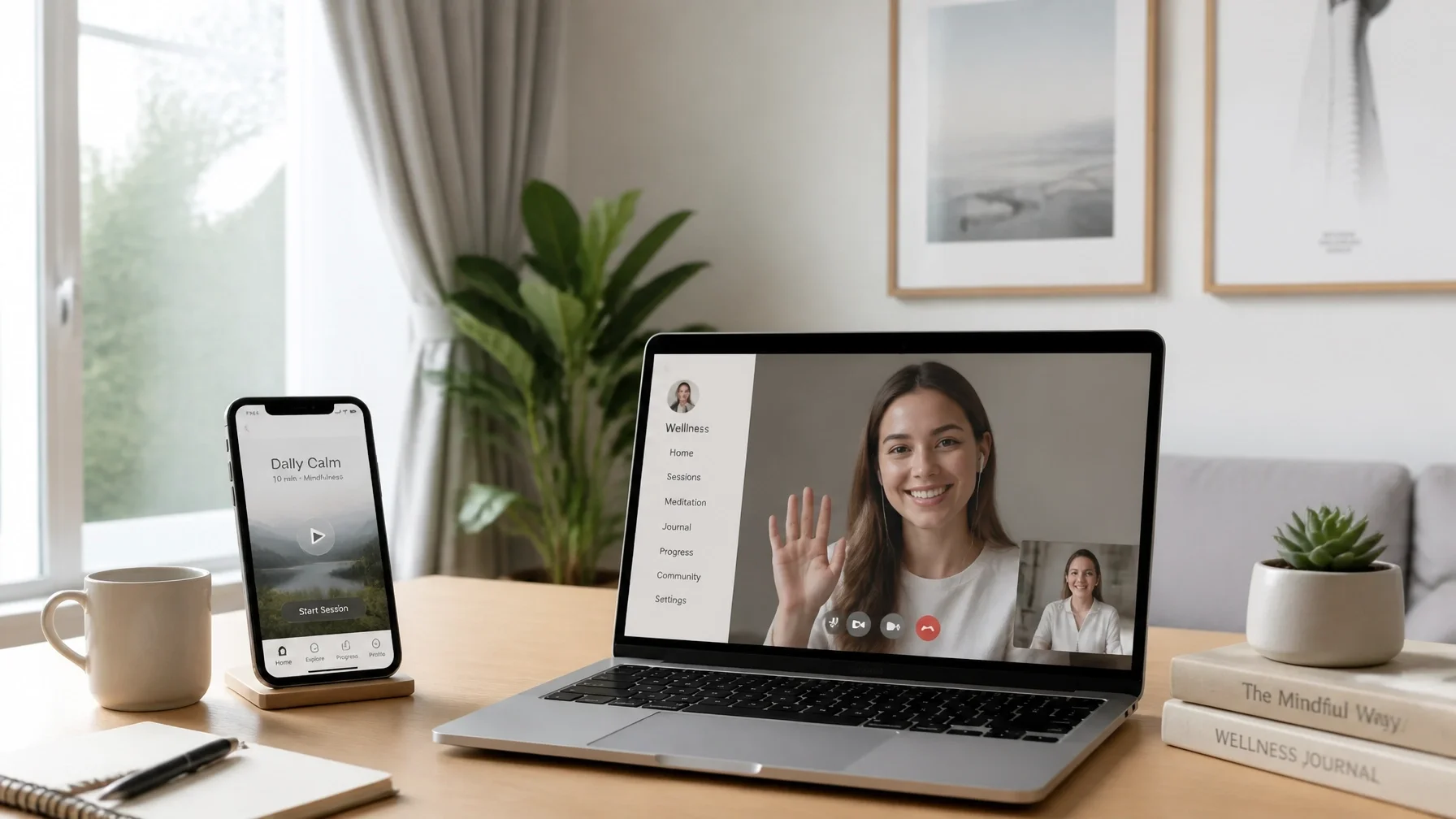
In 2026, the digital landscape for managing your mental health is more crowded than ever. If you have ever felt a surge of anxiety and reached for your phone, you have likely seen the thousands of apps promising "instant calm" or "anxiety relief in seven days." On the other hand, online therapy with a registered professional has become the gold standard for clinical care.
So, where do you put your energy? Is a $20-a-month app enough, or do you need the nuance of a human connection? Let’s have some real talk about the pros and cons of both, and how to decide what’s right for your journey with anxiety.
The Rise of the Mental Health App
Apps have democratized access to basic coping tools. Whether it’s a breathing pacer, a mood tracker, or a simplified CBT (Cognitive Behavioural Therapy) module, they are undeniably convenient.
The Pros: Why We Use Them
Accessibility: You can download an app in seconds. For someone experiencing a panic attack at 2 AM, having a grounding exercise on their bedside table is invaluable.
Low Cost: Compared to private therapy, most apps are inexpensive. They offer a low barrier to entry for those just starting to explore their mental health.
Habit Tracking: Apps excel at data. Seeing a graph of your mood over a month can help you identify triggers you might have missed.
Anonymity: For some, the idea of talking to a person is the very thing that triggers their social anxiety. An app provides a "safe" first step.
The Cons: Where They Fall Short
Lack of Nuance: An app cannot see your micro-expressions. It doesn't know if you’re being sarcastic or if your "fine" actually means you’re on the verge of a breakdown. As noted by 24/7 DCT, apps track streaks, not subtle emotions.
The "Notification Fatigue": It is incredibly easy to swipe away a reminder to meditate. Without human accountability, the "drop-off" rate for mental health apps is notoriously high.
Clinical Safety: If your anxiety escalates into a crisis, a standard app often lacks the sophisticated risk assessment required to keep you safe.
Privacy Concerns: Many commercial apps operate in a grey area regarding data. While they may use encryption, your "anonymized" data is often a valuable commodity for marketers.

The Human Element: Online Therapy
Online therapy isn't just "therapy through a screen", it is a clinical relationship. At The LifeBridge Network, we focus on evidence-based care delivered by an AHPRA Registered Psychologist.
The Pros: The Clinical Advantage
The Therapeutic Alliance: Research consistently shows that the relationship between the client and the therapist is one of the strongest predictors of success. A human therapist provides empathy, validation, and a tailored approach that an algorithm simply cannot replicate.
Tailored Evidence-Based Care: For conditions like anxiety, a one-size-fits-all module can sometimes be counterproductive. A psychologist can pivot in real-time, adjusting a CBT or exposure plan based on your specific neurodivergent traits or life circumstances.
Clinical Judgment: A professional can spot the difference between generalized anxiety and something more complex, like OCD or ADHD-related overwhelm.
Privacy and Ethics: Professionals are bound by strict codes of conduct and privacy laws (like the APS Code of Ethics). Your data isn't being sold; it’s being protected.
The Cons: The Barriers
Initial Cost: There is no sugar-coating it, professional therapy is an investment. While Medicare rebates and NDIS funding can help, the out-of-pocket cost is higher than an app subscription.
Scheduling: You have to show up at a specific time. For some, the mental load of managing appointments is a hurdle, though online platforms make this significantly easier by removing the commute.

Anxiety in 2026: Why Quality Matters
Anxiety isn't just "worrying." It is a physiological and psychological experience that can be debilitating. While apps are great for "daily reps", like a five-minute mindfulness session, they often struggle to address the root causes of chronic anxiety.
In 2026, we are seeing a shift toward Blended Care. This is the "gold standard" where you might use an app to track your heart rate or journal your thoughts, and then bring that data into your session with your psychologist. This allows for a deeper, data-informed conversation that accelerates progress.
A Note for Support Coordinators and Therapy Managers
If you are managing a caseload of participants, especially those who are neurodivergent, the distinction between an app and therapy is vital. Many of our clients with ASD or ADHD find traditional apps overstimulating or too rigid. Our approach at The LifeBridge Network is to provide an environment that is "neuro-affirming," focusing on the individual’s needs rather than a generic checklist.

Making the Choice
If you are trying to decide between hitting "subscribe" on an app or booking a session, ask yourself these three questions:
Is my anxiety impacting my ability to work or maintain relationships? If yes, you likely need the depth of professional therapy.
Am I looking for a habit-builder or a problem-solver? Apps are great for habits; psychologists are trained for problem-solving and clinical intervention.
Do I feel "stuck" despite using self-help tools? If you have been "app-ing" for months and feel the same, it’s time for a human perspective.
At The LifeBridge Network, we believe that everyone is welcome. We offer a space that is professional, evidence-based, and, most importantly, human.
Bridging the Gap
We don't expect you to have it all figured out before you call us. We offer a free 30-minute consultation to see if we are the right fit for your journey. This isn't a high-pressure sales call; it's a chance to discuss your needs and see how our tailored, online psychology services can support you.
Book your free 30-minute consult here.
📞 Crisis Support: The LifeBridge Network is not an emergency service. If you are in immediate distress or need crisis support, please contact Lifeline (13 11 14) or Beyond Blue (1300 22 4636). In an emergency, always call 000.
Important Note: The LifeBridge Network provides psychology services with an AHPRA Registered Psychologist (Zac Chadwick, PSY0002136185). All sessions are evidence-based and tailored to your specific needs. Please note that an initial admin consult is required before booking your first session to ensure we are the right fit for your journey. This is not a substitute for clinical intervention and provides broad and general information.