
First Session Jitters: What to Expect in Your First 10 Minutes
Anxiety about your initial session?
Beginning therapy often triggers physiological anxiety responses. This can be especially relevant for neurodivergent individuals, including ADHD and ASD clients, where unfamiliar environments, new social expectations, sensory load, or uncertainty about the process may increase anxiety. Initial sessions at The LifeBridge Network prioritize reducing that anxiety through structured procedural clarity, tailored pacing, and a professional, welcoming approach.

Normalization of Nervousness
Biological Basis: Stress responses (fight-or-flight) are common when entering a new therapeutic setting or discussing personal history.
Neurodivergent Considerations: ADHD and ASD clients may also notice heightened sensitivity to sensory input, transitions, ambiguity, or rapid social demands in a first session.
Clinical Goal: Support movement from initial anxiety toward a more regulated state for effective communication.
Support Framework: Psychologists provide a neutral, non-judgmental environment and can adapt communication style and session structure to individual needs.
Role of the AHPRA Registered Psychologist
In Australia, the title "Psychologist" is legally protected. Practitioners must be registered with the Australian Health Practitioner Regulation Agency (AHPRA).
Regulatory Standards
Compliance: Adherence to strict ethical codes and professional standards.
Education: Minimum six years of university training and supervised practice.
Competency: Ongoing professional development to maintain clinical skills.
Safety: Mandatory reporting and privacy protocols to protect client interests.
Professional Accountability
Choosing a registered psychologist ensures that counselling services meet national safety and quality benchmarks. This oversight is central to the online therapy Australia experience provided by The LifeBridge Network.
Methodology: Evidence-Based and Tailored Support
Clinical interventions are not standardized; they are adapted to individual data points, including the distinct needs, communication preferences, and functional experiences of neurodivergent clients.

Evidence-Based Practice (EBP)
EBP integrates three core components:
Scientific Research: Utilizing interventions proven effective in peer-reviewed clinical trials.
Clinical Expertise: The practitioner's experience in applying specific modalities.
Client Values: Aligning treatment with the individual's cultural, social, and personal preferences.
Tailored Treatment Plans
The LifeBridge Network rejects "one-size-fits-all" models. Sessions are structured based on:
Initial Assessment: Quantitative and qualitative data gathered during intake, including how ADHD or ASD may shape attention, emotional regulation, sensory experience, communication, and daily functioning.
Goal Definition: Specific, Measurable, Achievable, Relevant, and Time-bound (SMART) objectives aligned with the client’s priorities and neurotype.
Adaptive Feedback: Ongoing modification of the treatment plan based on client progress, feedback, and what is most sustainable in practice.
Neurodivergent-Affirming Support: Evidence-based strategies can be adjusted for direct communication preferences, sensory considerations, executive functioning differences, and the need for clear structure.
The 10-Minute Timeline: A Procedural Breakdown
The first ten minutes of a session are dedicated to establishing the clinical framework.
Minutes 1–2: Introductions and Orientation
The session commences with basic logistical and social orientation.
Greeting: Entry into the digital consultation room.
Identification: Verification of client and practitioner identity.
Environment Check: Ensuring the space is comfortable and private.
Sensory Considerations: Where relevant, checking for factors that may affect focus or comfort, such as noise, lighting, interruptions, or screen fatigue.
Communication Preferences: Establishing whether the client prefers a more direct, structured, slower-paced, or question-based style of interaction.
Minutes 3–5: Administrative Requirements and Consent
Clinical sessions require formal documentation and informed consent.
Confidentiality Limits: Explanation of when information must be disclosed (e.g., risk of harm).
Privacy Act Compliance: Discussion on data storage and record-keeping.
Fee Disclosure: Final confirmation of session costs and billing cycles.
Attendance Policy: Review of cancellation protocols.
This is also all available on our website
Minutes 6–10: Opening the Conversation
The psychologist initiates the clinical dialogue.
Current State Assessment: Brief check-in on the client’s immediate emotional status and current capacity for focus or engagement.
Agenda Setting: Identifying the primary concerns for the current session and clarifying how structured the client would like the conversation to be.
Background Context: Initial inquiry into the reasons for seeking anxiety, ADHD, ASD, or broader mental health support.
Neurodivergent Experience: Where relevant, discussion may include sensory needs, overwhelm, masking, executive functioning challenges, social communication differences, or previous therapy experiences.

Administrative Protocols and Client Rights
Understanding the administrative structure minimizes uncertainty.
Consent Forms
Clients receive digital documentation prior to the first session.
Purpose: Clear communication of the therapeutic contract.
Requirement: Signature is mandatory for the commencement of treatment.
Components: Professional boundaries, emergency contact procedures, and communication methods.
Privacy and Data Security
Storage: Encrypted clinical software for electronic health records.
Access: Clients maintain the right to request access to their clinical notes under specific legislative conditions.
Third-Party Disclosure: Requires explicit written consent, except where mandated by law.
Facilitating the Transition: Free 30-Minute Consult
To lower the barrier to entry, The LifeBridge Network offers a free 30-minute consult.
Objectives of the Preliminary Consultation
Compatibility Assessment: Determine if the psychologist’s expertise aligns with client needs.
Process Education: Clarify how future sessions will be conducted.
Logistical Resolution: Address questions regarding private health or Medicare rebates.
Expectation Management: Align client goals with clinical possibilities.
Booking Process
Select: Navigate to the booking portal.
Register: Enter contact details.
Attend: Connect via the provided link or arrive at the physical location.

Specific Clinical Pathways
Different support frameworks are available depending on funding and clinical necessity.
Medicare Consultations
Requires a Mental Health Care Plan (MHCP) from a General Practitioner.
Benefit: Subsidized sessions for eligible individuals.
Process: Present the referral during the administrative phase of the first session.
Resource:Medicare Consult Details.
NDIS Support
For participants with approved NDIS funding.
Alignment: Focus on capacity building and functional improvement.
Billing: Handled according to NDIS price guide standards.
Resource:NDIS Consult Details.
Private Consultations
Direct booking for individuals not utilizing government subsidies.
Availability: Immediate booking often available without a GP referral.
Resource:Private Consult Details.
Preparation Checklist for New Clients
To optimize the first 10 minutes, complete the following actions:
Review Documentation: Read all consent forms sent via email.
Technical Calibration: Test microphone and camera for online sessions.
Information Gathering: Prepare a list of current symptoms, relevant history, or specific ADHD/ASD-related concerns you want addressed.
Environment Preparation: Secure a quiet, private location for the duration of the call.
Sensory Planning: Adjust lighting, sound, seating, or other environmental factors that help you feel more comfortable and able to focus.
Communication Planning: Note any preferences for direct communication, processing time, written follow-up, or a more structured session format.
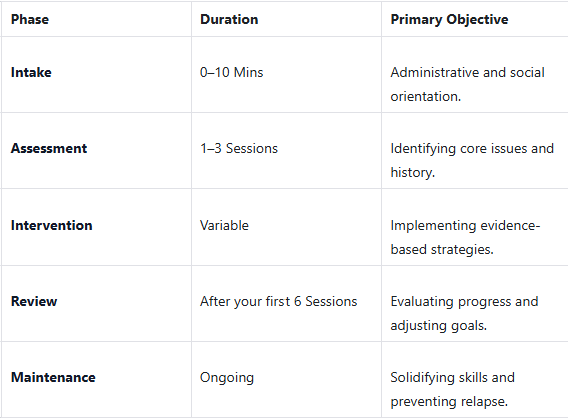
Logical Flow of the Therapeutic Process
The first 10 minutes are the entry point to a multi-stage process.
Action Items
Book: Secure a free 30-minute consult.
Inquire: Use the contact form for specific procedural questions.
Refer: Professionals can utilize the referral portal for client transfers.

Summary of Key Data Points
Professional Status: AHPRA Registered Psychologist.
Methodology: Evidence-based and tailored.
Neurodivergent Focus: Supports clients with ADHD, ASD, anxiety, and related mental health concerns.
Availability: Online and in-person options.
Accessibility: Free initial consult available.
Services are provided within a regulated clinical framework to ensure safety and therapeutic efficacy for all clients, including neurodivergent individuals. Everyone is welcome.